How to Identify Wolf Tracks in the Backcountry
For those who spend time in the backcountry, the ability to read animal tracks is a skill that deepens one’s connection to the landscape. Among the most intriguing tracks to identify are those left by wolves. Their paw prints often share similarities with those of large coyotes and domestic dogs, which can lead to confusion. Understanding the subtle but consistent differences between these species can help outdoor enthusiasts interpret what they see on the trail. This article outlines a systematic approach to distinguishing wolf tracks, focusing on measurable characteristics such as stride length, pad shape, and claw mark patterns.
The process of identifying wolf tracks does not rely on any single feature alone. Instead, it requires evaluating multiple elements together, including the overall track pattern, the terrain, and the time of year. Snow-covered ground, particularly along game trails, offers an excellent medium for practicing these observations. By learning to read these signs, hikers, hunters, and wildlife observers can gain a clearer picture of the animals moving through their environment. The following sections break down key identification criteria and offer practical guidance for fieldwork.
Understanding the Basic Track Dimensions and Stride Length
The size of a wolf track is often the first clue, but it must be evaluated with care. An adult wolf typically leaves a track that is between 4 and 5 inches long and 3.5 to 4.5 inches wide. These measurements are generally larger than those of a coyote, whose tracks are usually 2.5 to 3.5 inches long. However, large domestic dogs, such as German Shepherds or Labrador Retrievers, can produce tracks of similar dimensions, making size alone an unreliable indicator. What adds more clarity is the stride length, or the distance between successive prints of the same foot. Wolves tend to move with a direct register gait, meaning the hind foot steps into the print of the front foot. This results in a stride that is typically 30 to 40 inches long when walking, while coyotes often have a shorter stride of 18 to 24 inches. Dogs, particularly those that are not moving with a purposeful walking gait, often display a more erratic stride pattern or a wider straddle. Measuring the stride over a series of at least five consecutive tracks provides a more reliable basis for comparison.
Pad Shape and Toe Alignment
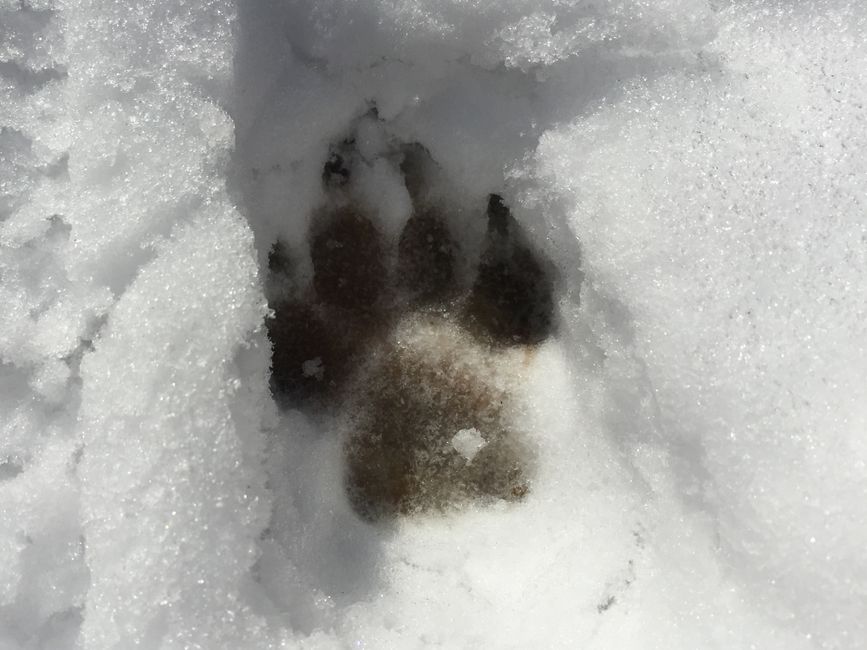
The shape of the main pad and the arrangement of the toes offer another set of distinguishing features. In a wolf track, the main pad is relatively large and has a distinct, somewhat triangular shape with two lobes at the front and a single, broad lobe at the back. The toes are arranged in a relatively narrow arc, with the outer toes often aligning closely with the front of the main pad. Coyote pads tend to be more elongated and narrower, with a more pronounced front lobe. The toes of a coyote are also more tightly grouped, making the overall track appear more compact. Domestic dogs show wide variation, but many breeds have a more rounded main pad and toes that spread outward, creating a less symmetrical pattern. When examining a track in snow or soft mud, it can be helpful to trace the outline of the pad and note the angle of the toes relative to the midline. Wolf tracks often display a subtle tendency for the two middle toes to be slightly longer than the outer ones, a detail that is less consistent in dog tracks.
Claw Marks and Their Position
The presence and placement of claw marks provide one of the most reliable methods for distinguishing wolf tracks from those of domestic dogs. Wolves, like other wild canids, often have claws that are worn down by frequent travel over rough terrain. As a result, their claw marks appear as small, sharp impressions located relatively close to the toes. In many cases, the claw marks are more visible on the outer toes than on the middle toes. Coyote claws are similarly worn, but their impressions are generally finer and more consistently present. Domestic dogs, on the other hand, frequently have longer, less worn claws that leave deep, prominent marks that extend well beyond the toe pads. These claw marks are often spaced farther from the toes and may be visible on all four toes. Additionally, dogs that are walked on soft surfaces or have limited exposure to hard ground may show no claw marks at all due to nail growth. In snow, claw marks can be more difficult to detect, but brushing away loose snow around the toe area can reveal the impressions. It is worth noting that some individual wolves may also have longer claws depending on recent travel conditions, so claw marks should always be considered alongside other features.
Using Snow-Covered Game Trails for Practice
Snow provides an ideal substrate for practicing track identification because it preserves fine details and allows for easy measurement of stride length. Game trails, where wildlife moves between feeding and bedding areas, are particularly good locations for finding wolf tracks. Fresh snow, ideally within 12 to 24 hours of a snowfall, offers the clearest impressions. When following a set of tracks, it is important to look for multiple prints in a straight line to assess gait patterns. Wolves often travel in a narrow lane, while domestic dogs tend to wander more. Coyotes may also follow game trails, but their smaller stride and more compact track shape are usually distinguishable with practice. Observers should also note the presence of other signs, such as scat or urine markings, which can provide additional context. A useful approach is to take photographs of any questionable tracks alongside a ruler or a known object for scale. Over time, building a personal reference set of images from known wolf, coyote, and dog tracks can significantly improve identification skills.
Considering the Ecological Context of Wolf Tracks
Track identification becomes more meaningful when placed within the broader ecological setting. Wolves generally inhabit remote areas with low human disturbance, particularly in the northern Rocky Mountains, the Great Lakes region, and parts of the Pacific Northwest. Their home ranges can span hundreds of square miles, and they tend to use established travel corridors such as ridgelines, river valleys, and game trails. Coyotes are more adaptable and can be found in a wider range of habitats, including suburban fringes and agricultural land. Domestic dogs, by contrast, are usually encountered near trails or campgrounds and often show signs of leash use or proximity to human settlements. The presence of a single track does not confirm the species; rather, a pattern of tracks over distance, combined with the animal’s likely movement through the area, provides stronger evidence. Wildlife tracking is a skill that develops over time, and each observation adds to a broader understanding of how different species use the landscape. For those interested in deepening their knowledge, organizations such as Wild Trails offer resources and workshops that focus on field identification techniques.